Article Directory
The market, as I often remind my readers, is a fickle beast. It loves a good story, but it loves a better catalyst. And right now, the story of Zcash, with its recent meteoric rise, is a data analyst's dream—or perhaps, a nightmare, depending on your position. We’re talking about a cryptocurrency that, by November 8th, was trading at $676.64, a staggering 1,486% surge in just three months. To put that in perspective, from October 1st, Zcash went from $74.30 to an intraday high of $750 on November 7th. That’s a 10-fold increase—more accurately, just over a 10.1x jump—in little over a month. The question, then, isn't if something happened, but what exactly lit this particular fuse.
The Privacy Playbook Gets a Solana Makeover
For years, Zcash has been the quiet kid in the back, championing privacy in an increasingly transparent blockchain world. Its core tenet, zero-knowledge cryptography, allows for fully encrypted transactions through a "shielded pool." This is not new technology; it's foundational. What is new, however, is the recent integration with Solana through Zenrock's wrapped ZEC token, zenZEC. This isn't just a technical footnote; it's a strategic maneuver designed to bridge Zcash's privacy ethos with Solana's high-throughput, low-cost DeFi ecosystem.
Zenrock’s co-founder, Aditya Dave, hits on a point I've made repeatedly: "Privacy is so core to the ethos of crypto... As a result, privacy as a tenet of crypto has been sacrificed." He’s not wrong. The influx of traditional finance (TradFi) money, often through stablecoins, has pulled crypto toward regulated transparency, pushing privacy further into the shadows. Zenrock's zenZEC aims to reverse that, using a decentralized multi-party computation (MPC) network to wrap ZEC. This MPC network is clever, splitting private keys into multiple independent shares, ensuring no single point of failure. It's an elegant solution (and one I find genuinely interesting from a cryptographic security perspective) that promises Zcash holders real on-chain DeFi exposure on Solana for the first time in over seven years.
Now, let's talk numbers. Since its debut on October 31st, zenZEC has recorded approximately $15 million in total trading volume. Dave and others might call this "pivotal," signaling the introduction of privacy as a feature in DeFi. But let’s be precise: $15 million is, frankly, paltry in the grand scheme of crypto, where blockbuster tokens routinely trade in the billions. It's a small ripple, not a tidal wave, especially when juxtaposed against ZEC's multi-billion dollar market cap and its dramatic price action. Is this volume truly a "pivotal" signal, or just a small ripple in a much larger, speculative ocean? That's the methodological critique I’d apply here. The narrative is strong, but the direct, measurable impact on volume for the wrapped asset is still embryonic.
Deconstructing the Surge: Beyond the Narrative
So, if zenZEC's volume isn't the primary driver of the Zcash price explosion, what is? Jake Kennis, an analyst at Nansen, points to multiple converging factors, and his analysis aligns with what the data clearly shows. First, there's the ideological component: privacy has transitioned from a niche feature to a perceived necessity. As governments and private entities expand blockchain analytics, the demand for confidentiality grows. This manifests in the steady expansion of Zcash’s shielded pool, which indicates actual usage of its privacy features, not just speculative hoarding.
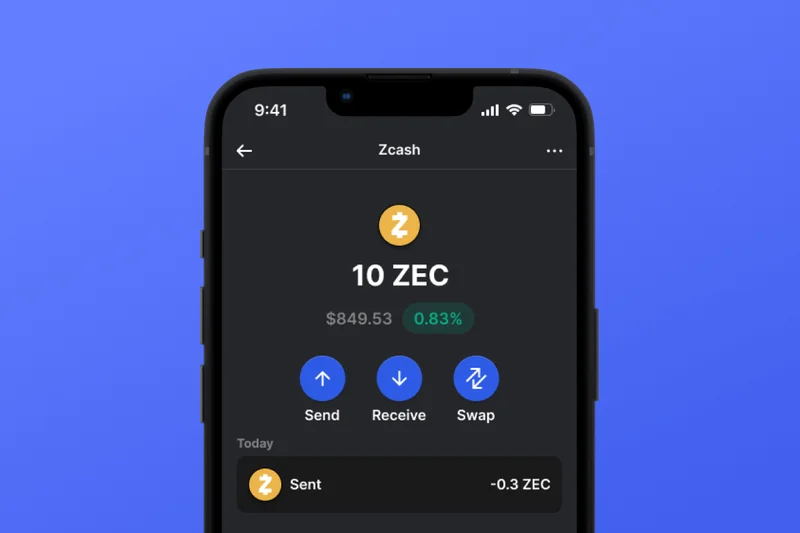
Second, the technical architecture has matured. Beyond the Zenrock integration, improvements to Zcash’s zero-knowledge proof system and the launch of the Zashi wallet have made shielded transactions significantly more accessible. This addresses a major friction point. Previously, privacy was often reserved for the technically sophisticated; Zashi simplifies the process, potentially broadening the user base.
But here’s where the numbers get really interesting. Kennis highlights "speculation beyond the technology" and points to an "extremely negative funding rate" in derivatives markets. This is the tell-tale sign of a crowded short position. When a price starts to climb against a heavily shorted asset, those short sellers are forced to buy back to cover their positions, creating a cascade of liquidations. It’s like trying to hold a beach ball underwater; the harder you push, the more violently it erupts when you let go. This forced buying acts as an accelerant, pushing prices far beyond what fundamental developments alone might justify.
Add to this the Bitcoin-like tokenomics—a fixed 21 million supply cap, proof-of-work consensus, and an upcoming halving—which positions Zcash as an "encrypted Bitcoin" in the eyes of some investors. This narrative, combined with renewed attention from industry figures like Arthur Hayes and Barry Silbert, injects liquidity and FOMO into the mix. My analysis suggests that while the Zenrock integration and privacy narrative provide a compelling backdrop, the sheer velocity of the ZEC rally was amplified, if not primarily driven, by a massive short squeeze. The foundation for growth is there, but the skyscraper was built in a hurry with some speculative rebar.
The Data's Unspoken Truth
The Zcash surge is a fascinating case study in market dynamics. It's a blend of legitimate technological advancements, a timely shift in market sentiment toward privacy, and the undeniable force of speculative capital and derivatives market mechanics. While Zenrock's zenZEC integration on Solana is a crucial step for Zcash's long-term DeFi utility, the $15 million volume, while growing, hasn't yet reached a scale that could unilaterally account for a near 1,500% price increase. The price action, I’m afraid, moved far ahead of the current utility metrics for the wrapped asset.
What we’re seeing is a market re-evaluating an asset that had been largely overlooked, finding a fresh narrative, and then having that narrative supercharged by the unwinding of bearish bets. The question remains: can the actual, measurable utility—the expansion of the shielded pool, the sustained growth of zenZEC volume, and its eventual deployment as collateral—catch up to the valuation before the inevitable profit-taking cools things down? The data suggests the true test for Zcash isn't whether it can soar, but whether it can build a sustainable altitude.