Article Directory
A Tale of Two Timelines
On October 29th, 2025, two fundamentally opposing narratives about the Alaska-Hawaiian airline merger unfolded in parallel. One was a story of meticulous planning, corporate control, and the clean, decisive end of an era. The other was a story of systemic chaos, digital collapse, and the illusion of that very control. Both are true, and the discrepancy between them tells us more about modern enterprise than any press release ever could.
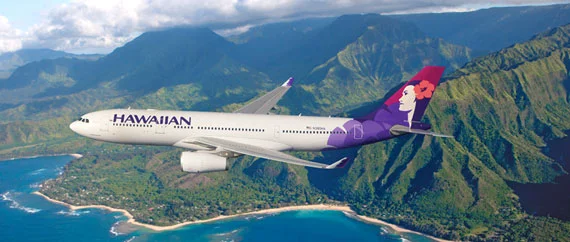
The first narrative was the official one. After months of integration, Alaska Air Group reached its capstone moment: securing a single operating certificate from the FAA. This is the bureaucratic finish line, the point where two distinct airlines officially become one operational entity. To mark the occasion, Hawaiian Airlines flight 866, departing from Pago Pago, became the final flight to use the callsign “HAWAIIAN.” For nearly a century, that callsign was a constant in the Pacific sky. Now, it was gone, absorbed into the “ALASKA” designator. The transition was meant to be a quiet, dignified, and above all, seamless conclusion. The Pualani logo might still be on the tail, but the operational soul—the identifiers HA and HAL—was retired. It was a planned extinction event.
Then came the second narrative.
On that very same day, guests trying to visit alaskaair.com or hawaiianairlines.com were met with… nothing. A global outage at Microsoft Azure, the cloud computing backbone for countless corporations, had pulled the plug. The newly unified airline’s primary digital touchpoints were offline. Passengers couldn't check in online; the airline’s advice was a regression to a bygone era: “see an agent at the airport.” The carefully constructed image of a hyper-efficient, integrated mega-carrier was instantly shattered by a dependency they couldn’t control.
This wasn't just a minor hiccup. It was a perfectly timed, deeply ironic system failure. The airline had just spent months painstakingly merging its internal human and mechanical systems, only to have its public-facing digital infrastructure completely fail on day one of its unified life. I’ve reviewed dozens of merger integration plans, and the focus is almost always on internal systems—fleet, crew, routes. The external dependencies, the ones you can't control, are often just a footnote. This event elevates that footnote to the headline.

The Fragility of the Integrated Machine
The juxtaposition of these two events is where the real analysis lies. A single operating certificate is a symbol of mastery over complexity. It tells the world that you have successfully woven together two intricate webs of logistics, maintenance schedules, and crew assignments. It is the ultimate projection of internal competence. Yet, the Azure outage demonstrated that in the modern economy, internal competence is only a small part of the equation.
An airline today isn't just a collection of planes and people; it's a node in a sprawling, interconnected digital ecosystem. Its functionality is inextricably linked to server farms it doesn’t own and code it didn’t write. This is the central vulnerability. The merger created a larger, theoretically more robust airline, but it also consolidated its reliance on a single, massive, third-party point of failure. (The disruption wasn't isolated, of course; reports noted issues with services from Costco to Office 365, which only underscores the systemic risk.)
This entire episode is like an engineer spending a year building the world’s most sophisticated car engine, turning the key for the first time, and then realizing the entire national power grid has just gone down. The engine is perfect, but it’s useless. Did the architects of this merger truly stress-test for this kind of external, non-aviation-related contingency? Or was the focus so lasered-in on FAA compliance and fleet logistics that the cloud infrastructure was treated as a utility that would simply always be there?
The timing is what makes this a case study for the ages. It wasn't just a bad day; it was the worst possible day. It publicly exposed the fault line between the story a corporation tells about itself and the fragile reality of its operations. The press release from Alaska Air Group, Alaska Airlines and Hawaiian Airlines reach major integration milestone: a single operating certificate, spoke of a new era of service and connectivity, of a combined network of over 140 destinations. But on the day that new era was born, the company couldn't even manage its most basic digital connection with its customers. The ghost of Hawaiian’s independent identity didn't just fade away; it seemed to leave behind a parting gift—a system-wide glitch that served as a final, poignant reminder of how things can go wrong.
The Signal Drowned by the Noise
Ultimately, the events of October 29th reveal a fundamental truth: corporate narratives are aspirational, but system dynamics are absolute. Alaska Air Group wanted to send a clear signal of a successful, completed merger. Instead, the universe, via a server in a data center, replied with overwhelming noise. The day wasn't a celebration of seamless integration; it was a live-fire drill in systemic fragility. Hawaiian Airlines didn't just get absorbed; its final day was marked by a digital failure that perfectly symbolized the loss of control inherent in becoming part of a much larger, more complex, and ultimately more vulnerable machine. The callsign is gone, but the chaos of its final bow will be the story that endures.