Article Directory
Generated Title: Space Isn't the Final Frontier; It's the Ultimate Tragedy of the Commons
China and the U.S. are finally talking about space traffic. Good. But let’s not mistake a single act of coordination for a solution to a looming catastrophe. The reality, obscured by optimistic headlines, is that the economics of space are fundamentally broken, and we're headed for a cosmic landfill.
The Illusion of Progress
NASA lauded China’s outreach about a potential satellite collision as a "first." It’s framed as progress, a sign that even with geopolitical tensions, space can be a zone of cooperation. Alvin Drew, director for NASA Space Sustainability, is quoted as saying it was a “celebration.” Seriously? One phone call after years of radio silence hardly warrants popping champagne.
Let’s be clear: this isn't altruism. It’s a self-preservation tactic. Both the U.S., primarily through SpaceX's Starlink, and China, with its Guowang and Thousand Sails projects, are launching satellites at an insane rate. The article notes active satellites in low Earth orbit have exploded from under 1,000 in 2019 to over 10,000 today. Some project 70,000 by 2030. Those numbers aren't just large; they're terrifying.
The problem isn't just the quantity of satellites. It's the tragedy of the commons playing out in real-time, above our heads. Each operator has a limited incentive to avoid creating debris, because the cost of that debris is shared by everyone. Meanwhile, the benefit of launching another satellite accrues directly to the operator.
The Data Deluge Problem
And it's not just physical congestion. As one article points out, the sheer volume of space domain awareness (SDA) data is becoming overwhelming. Joe Chan, chairman of the Space Data Association, notes operators are drowning in alerts from multiple sources, unsure of what to do. We're generating more data about space than we can effectively process. It’s like having a thousand security cameras but nobody watching the monitors.
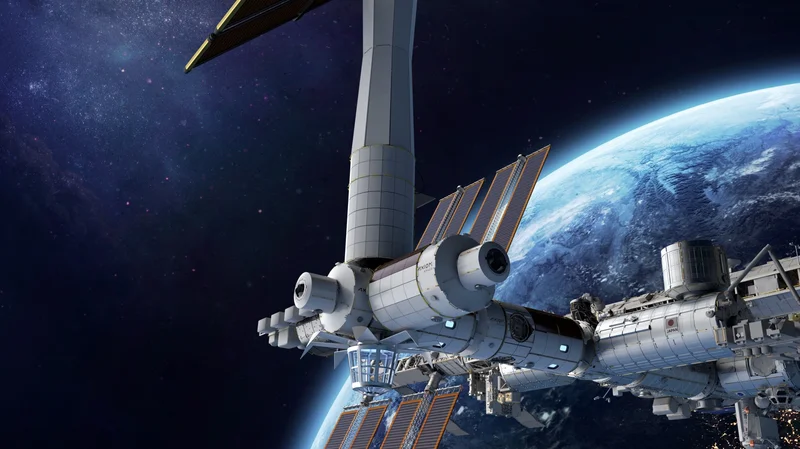
Here's the part I find genuinely puzzling: Why is "mapping space" even a competitive advantage? As Araz Feyzi, co-founder of Kayhan Space, rightly points out, simply plotting dots on a globe isn't valuable. The value lies in precision tracking. So why are companies building redundant, proprietary systems instead of collaborating on a unified, high-fidelity map?
The answer, inevitably, is money. Everyone wants to own the "killer app" for space traffic management, even if that means duplicating efforts and creating a fragmented, inefficient system. Armand Musey, a satellite analyst, observes that the industry has been recycling the same ideas for decades, chasing the next big sensor breakthrough.
The FAA restricting daytime commercial rocket launches due to the government shutdown is a perfect microcosm of the larger problem. (The shutdown, of course, is itself a result of political gridlock over resources). The FAA order effectively limits SpaceX's Starlink launches, among others, because of air traffic delays caused by staffing shortages. So, the very infrastructure enabling the space boom is being hampered by terrestrial problems. See FAA restricts commercial rocket launches indefinitely due to air traffic risks from government shutdown.
Toward a Cosmic Landfill
The industry is slowly waking up to the need for collaboration. Chiara Manfletti, CEO of Neuraspace, argues the future depends on interoperability, not dominance. Ecosmic co-founder Imane Marouf says the value lies in turning data into insight, not just collecting it. But these are just words. The fundamental economic incentives remain misaligned.
We're treating space like an infinite resource, a vast frontier to be exploited. But it's not. It's a finite, fragile environment, and we're rapidly polluting it with debris. The consequences of a major collision cascade – the Kessler syndrome – could be catastrophic, rendering entire orbital regions unusable for decades, if not centuries. And this is the part that keeps me up at night.
Space: A Race to the Bottom
The "space race" narrative has always been about national pride and technological prowess. But now, it's a race to the bottom, a competition to see who can launch the most satellites and grab the biggest share of the market, regardless of the long-term consequences. Unless we fundamentally change the economics of space, we're not just exploring a new frontier; we're creating a cosmic landfill.